 Inksky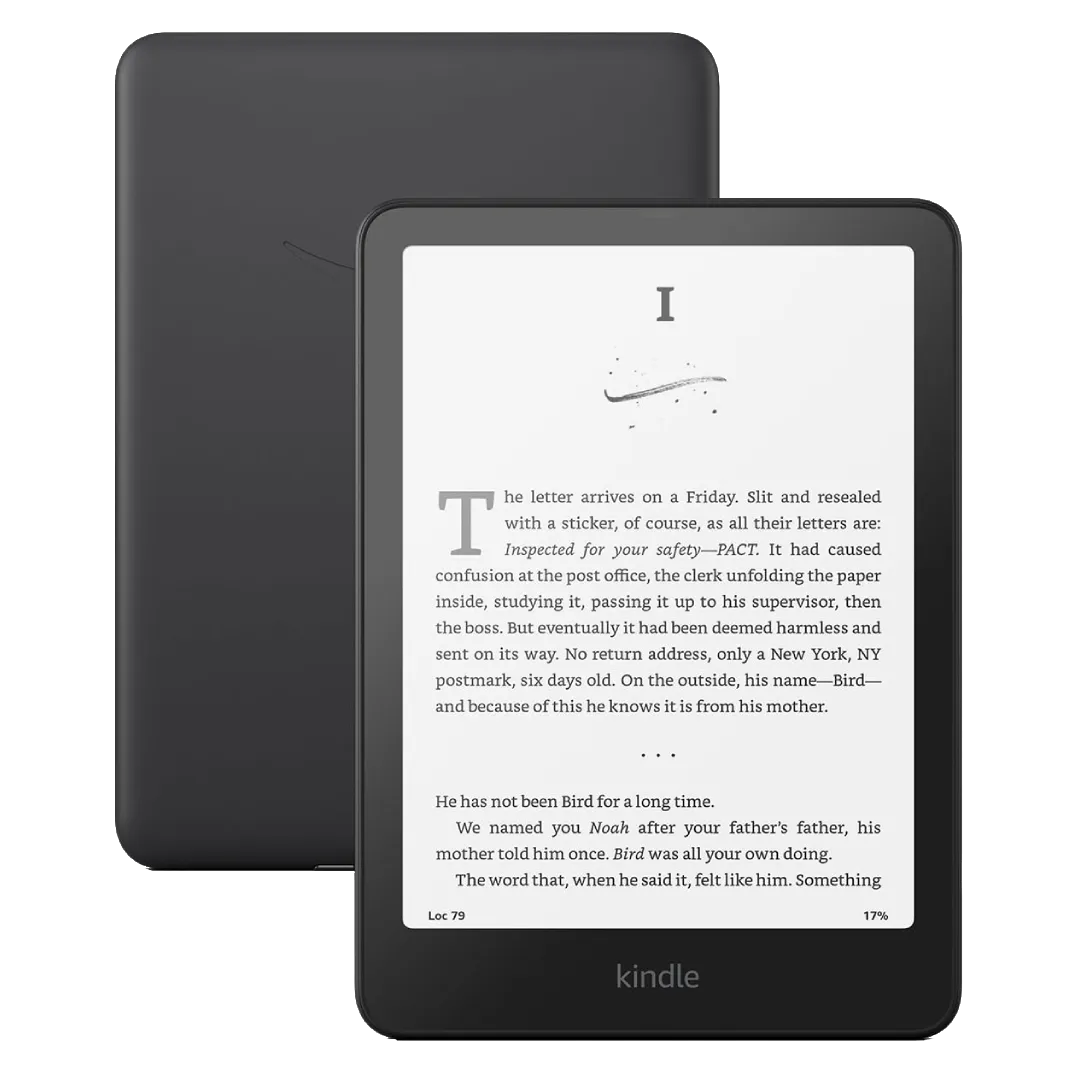
Q3 2026 is shaping up to be one of the busier quarters in recent e-reader memory. Between Amazon’s color ambitions, Kobo’s software momentum, and E Ink’s new display technology finally getting a ship date, there’s a lot to track. Here’s what’s happened since June and what to watch for through September.
Amazon Colorsoft 2: what the supply chain is saying
The original Kindle Colorsoft — Amazon’s first color e-reader, launched in late 2024 — sold well but drew criticism for its washed-out color saturation and a screen-door effect that some users found distracting. A second-generation model now appears to be in active development.
Supply chain reports out of Taiwan and South Korea point to a new Kaleido 3 Plus panel from E Ink with roughly 30% faster color page turns and improved saturation — still not Gallery-level, but closing the gap. The display size stays at 7 inches, but early prototypes reportedly have a flush glass front instead of the recessed screen on the current model. Amazon hasn’t confirmed anything publicly, but multiple component suppliers have referenced a “Q4 2026” production timeline, which would put a launch in October or November — right alongside the Paperwhite refresh cycle.
Whether Amazon calls it “Colorsoft 2” or something else is anyone’s guess. Internally, it’s apparently referred to as “Project Tahoe,” which follows Amazon’s pattern of using river names for Kindle hardware projects.
Kobo firmware 4.42: Libby integration expanding
Kobo’s 4.42 firmware, initially a limited rollout in Canada and the UK, is now reaching devices in the US, Australia, and parts of Europe. The headline feature is deeper Libby integration: you can now browse your library’s OverDrive collection and place holds directly from the Kobo, rather than needing the Libby phone app as a middleman. Borrowed books still sync through the existing Kobo-OverDrive handshake, so the flow is: browse and borrow on Kobo → the book appears in your library → syncs across Kobo devices and the Kobo app.
Separately, Kobo has quietly confirmed that firmware 4.43 is in internal testing with a focus on accessibility — improved text-to-speech voice quality and better screen reader support using the device’s built-in speaker (where available). No release date yet, but “late summer 2026” was mentioned in a Kobo developer forum post.
Boox Note Max: a 13.3-inch Carta 1300 beast
Boox launched the Note Max in China in mid-June, and it’s a spec-topping device by any measure. The 13.3-inch E Ink Carta 1300 panel — the largest in any currently shipping e-reader — has a 300 PPI resolution in black and white, 2200×1650 native, with a Wacom EMR layer for the stylus. It runs Android 14 with Boox’s V4.0 firmware, 6 GB of RAM, and 128 GB of storage. A microSD slot pushes expandable storage to 2 TB.
The Note Max is positioned as a professional note-taking and document review device, competing directly with the reMarkable Paper Pro but with the full Android app ecosystem. Boox hasn’t announced international pricing or availability yet, but the Chinese retail price of ¥4,299 (roughly $590 USD) suggests it’ll land in the $650-700 range when it reaches US and European distributors — likely through Boox’s official Amazon storefront and B&H Photo.
PocketBook expands US distribution
PocketBook has historically been a European brand with limited US availability — you could buy their devices on Amazon but they often shipped from third-party sellers with spotty warranty support. That’s changing. Starting this month, B&H Photo is carrying the full PocketBook lineup: the Verse Pro, Era, Era Color, and InkPad 4, with US warranty coverage and local support. B&H is also stocking first-party cases and screen protectors, which were previously hard to find stateside.
This isn’t a flashy announcement, but it matters. PocketBook’s hardware — especially the Era and InkPad 4 — is genuinely competitive with Kindle and Kobo, and broader distribution means more people will actually see them before buying. If you’ve been curious about PocketBook but didn’t want to deal with international returns, now’s the time.
E Ink Gallery 4: Q2 2027, confirmed
The news many of us have been waiting for: E Ink has confirmed that Gallery 4, the next generation of their Advanced Color ePaper (ACeP) technology, will enter consumer devices in Q2 2027. Two manufacturers are confirmed as launch partners — one is almost certainly reMarkable (they’ve been showing Gallery prototypes at trade shows), and the other is widely believed to be iReader, the Chinese brand that beat everyone to market with the first Gallery 3 device.
Gallery 4’s key spec improvements over Gallery 3: color refresh time drops from roughly 1.5 seconds to under 500 milliseconds (still not video-capable, but usable for illustrated books and comics), contrast improves by about 20%, and the color gamut expands to cover roughly 85% of DCI-P3. For reference, the original Kaleido covers about 50-55% of DCI-P3. Gallery panels don’t use a color filter array — each pixel is its own color, like a print page — so there’s no screen-door effect and no resolution penalty for color content.
Don’t expect Gallery 4 Kindles or Kobos in 2027. The cost per panel is still roughly 3x that of a Kaleido panel, and the 500ms refresh makes it unsuitable for UI navigation at the speed consumers expect. Gallery 4’s first generation will be note-taking and document review devices — reMarkable’s territory — with consumer reading tablets following in 2028 or later.
That’s Q3 so far. Between now and September, I’m watching for: Amazon’s Colorsoft 2 teaser (they usually preview new Kindles at a September hardware event), Kobo’s 4.43 release notes, and Boox’s international Note Max pricing. If any of those drop, I’ll update accordingly.