 Inksky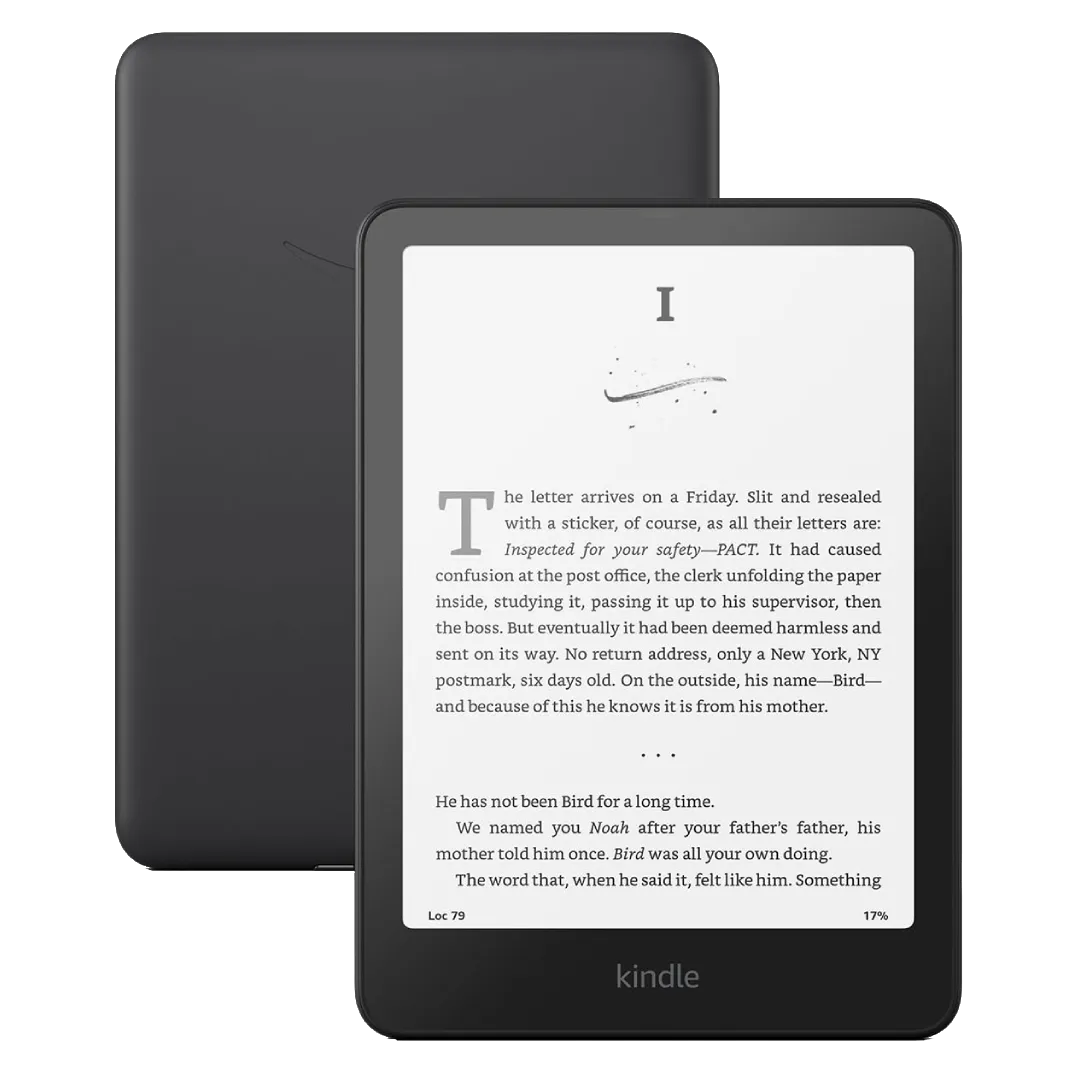
I’ve been sideloading fonts onto Kindles for years, and honestly, it’s the single most impactful tweak you can make. Bookerly is fine, but once you’ve read a novel set in Literata or EB Garamond, there’s no going back. Here’s everything I’ve learned the hard way.
Where to get good fonts
Google Fonts is your best bet — everything’s free, properly licensed, and well-hinted for screen rendering. My daily driver is Literata, which Google commissioned specifically for long-form reading on screens. If you have any vision issues, grab Atkinson Hyperlegible from the Braille Institute; it exaggerates letterforms just enough to eliminate ambiguity between similar characters like capital I and lowercase l, without looking like a “special” font.
A few other serif favorites: Crimson Pro has that old-book warmth, Libre Baskerville feels classic without being fussy, and EB Garamond looks like a proper printed novel. For non-fiction I’ll often switch to Noto Sans or IBM Plex Sans — they’re cleaner for technical material.
Only .ttf and .otf files work. Kindle ignores .woff, .woff2, and everything else. I’ve made that mistake more than once.
The install process
Plug your Kindle into your computer via USB. It’ll mount as a regular drive. Navigate to the root and look for a folder called /fonts/. If it doesn’t exist, create one — the name is lowercase and it goes at the top level, not inside /documents/ or anywhere else. This trips people up constantly.
Now here’s the big gotcha: you need all four variants of a font family for it to work properly. Drop in just FontName-Regular.ttf and your bold and italic text will fall back to whatever the Kindle feels like using. You need:
/fonts/
├── FontName-Regular.ttf
├── FontName-Italic.ttf
├── FontName-Bold.ttf
├── FontName-BoldItalic.ttf
The naming convention matters. Kindle looks for -Regular, -Italic, -Bold, and -BoldItalic suffixes. If your downloaded font uses different naming (some use -Rg, -It, -Bd), rename the files before copying. I’ve spent twenty minutes debugging a font that wouldn’t show italic, only to realize the file was named Literata-It.ttf.
Eject safely, open a book, tap Aa → Font, and your custom fonts will appear at the bottom of the list. If they don’t show up, a restart (hold the power button for 20 seconds) usually fixes it.
Watch out for embedded fonts
Some publishers hard-code a font into the book file. If your custom font isn’t taking effect, go to Aa → Layout and toggle Publisher Font off. I check this on every new sideloaded book.
A quick note on limits
You can install a surprising number of fonts, but beyond 15–20 the font menu gets noticeably sluggish. Each file is only a few hundred KB so storage isn’t the issue — it’s the menu rendering. I keep about a dozen installed and swap them out seasonally. Back up your /fonts/ folder somewhere; factory resets wipe it clean.