If you are a heavy Kindle highlighter, you know the problem: the My Clippings.txt file on your Kindle is a massive, unstructured text dump. Every highlight and note from every book you have ever read, mashed together in chronological order. Finding anything useful means scrolling through thousands of lines. This is the file Amazon gives you as the official export for your reading data — and it is nearly useless in its raw form.
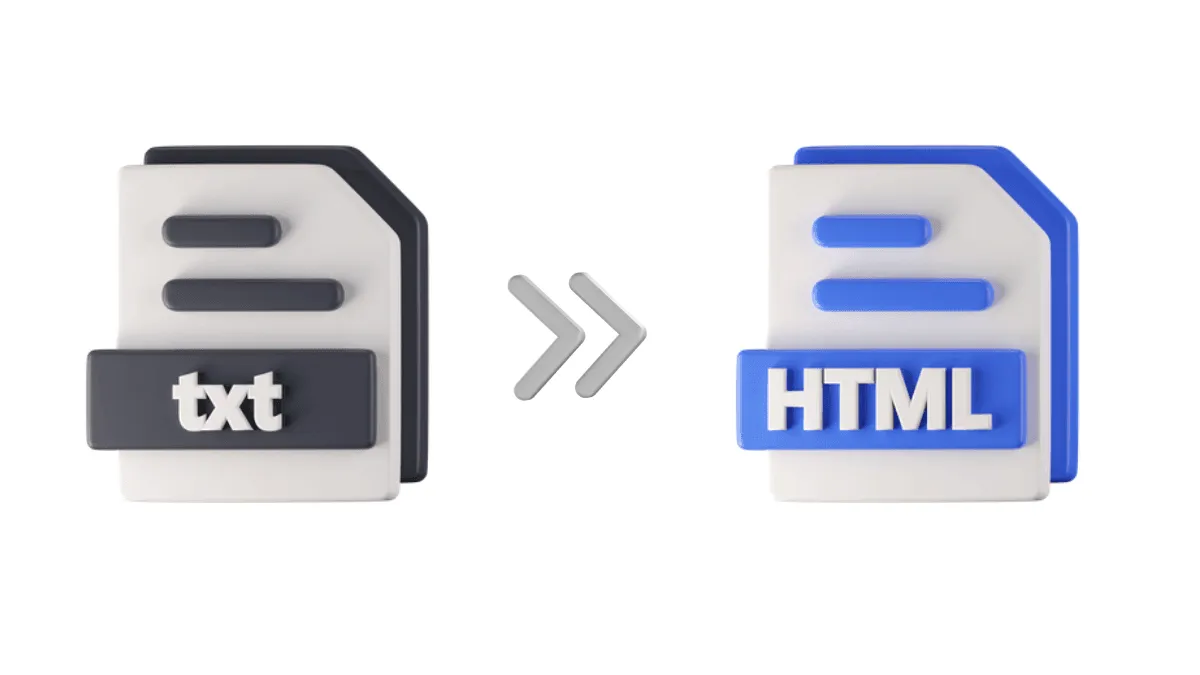
Clippings Fere turns that chaos into clean, organized HTML. Each book gets its own section with highlights grouped together — readable at a glance, searchable, and ready to export into any note-taking app. It is a free tool from the developer BookFere, and if you highlight non-fiction, it is the difference between highlights you actually review and highlights that sit unread in a text file forever.
What My Clippings.txt actually is (and why it is terrible)
Every Kindle device maintains a single file called My Clippings.txt in the documents folder. Every time you highlight a passage or add a note, Kindle appends to this file. The format looks like this:
==========
Atomic Habits (James Clear)
- Your Highlight on page 42 | Location 632-634 | Added on Monday, 15 January 2024 21:03:42

Small habits don't add up. They compound.
==========
The problems with this format pile up quickly:
- No organization by book. Every highlight from every book is interleaved chronologically. If you highlighted something in a novel, then switched to a non-fiction book, then came back to the novel, the highlights are scattered across the file in the order you made them, not grouped by book.
- No structure for export. The file is plain text with
==========separators. There is no way to filter, search by book title, or export a single book’s highlights without manually scrolling and copy-pasting. - It accumulates forever. Kindle never cleans this file up. If you have read 50 books and highlighted passages in all of them, every single highlight is in this one file. It can easily grow to thousands of lines.
- Deleted highlights linger. If you delete a highlight from the book on your Kindle, the original entry remains in My Clippings.txt — the file is append-only, and deletions are not retroactively removed.
- No formatting preservation. If the book had italics, bold text, or special characters in the highlighted passage, that formatting is stripped in the clippings file.
The end result is that most Kindle users never look at their highlights after making them. The file exists, the data is there, but it is so inconvenient to use that it may as well not exist.
What Clippings Fere does differently
Clippings Fere parses the My Clippings.txt file and produces a clean HTML document where:
- Each book gets its own section with the title as a clearly styled heading. You can scroll to any book at a glance.
- Highlights are grouped together in chronological order within each book, so you see the arc of your notes as you progressed through the reading.
- Notes you added to highlights are preserved and displayed inline, distinguished visually from the highlighted passage.
- The output is formatted with readable typography — proper line spacing, clear separation between highlights, and a clean layout that works in any browser.
- The HTML file can be imported into Obsidian, Notion, Roam Research, Logseq, or any note-taking app that accepts HTML imports.
The transformation is dramatic. What was a single 10,000-line text file becomes a structured document you can actually use — browse by book, copy passages into your note-taking system, search for keywords across all highlights, or print a formatted summary of everything you marked up in a particular book.
Clippings Fere vs manual export vs Readwise
There are a few ways to get highlights off a Kindle, and they serve different needs.
Manual copy-paste is the brute-force approach: open My Clippings.txt in a text editor, scroll to the book you want, and copy highlights one by one. It works for a book or two, but it does not scale beyond that, and you get no formatting or organization beyond what you create yourself.
Readwise is the premium option. It syncs highlights automatically from Kindle, Apple Books, Instapaper, Pocket, and a dozen other sources into a unified dashboard. It resurfaces highlights daily for spaced-repetition review, exports to Notion, Obsidian, and Roam, and costs $8.99 per month. Readwise is fantastic if you highlight across multiple platforms and want automated review workflows, but it is overkill — and over-budget — if all you need is to pull highlights from a single Kindle into a readable format once a month.
Clippings Fere sits in the middle. It is a one-time, manual process — you copy the clippings file, run it through the tool, and get a formatted HTML output. There is no sync, no cloud account, no subscription, and no automation. But it is free, it runs locally on your computer with no internet connection required, and the output quality rivals what Readwise produces for Kindle-only highlights. For someone who reads primarily on a Kindle and wants a straightforward way to organize highlights every few months, Clippings Fere is the right level of complexity.
Step-by-step usage
Clippings Fere is available from BookFere’s website. There are versions for Windows and macOS — no Linux native build, but the Windows version runs under Wine without issues.
The workflow takes about two minutes:
- Connect your Kindle to your computer via USB. Your Kindle will appear as a removable drive. Navigate to the
documentsfolder. If you have multiple folders, the clippings file is usually in the root ofdocuments— not inside any subfolder. - Copy
My Clippings.txtto your computer. Do not open it directly from the Kindle — copy it to your desktop or documents folder first. Working on a copy protects the original in case something goes wrong, and it is faster to read from your local drive than over USB. - Launch Clippings Fere. The interface is minimal — a single window with a file selector and an output destination chooser. It is not localized beyond Chinese, but the controls are simple enough that language is not a barrier. Select your
My Clippings.txtfile. - Choose an output location. Pick where you want the HTML file to be saved. The tool names the output file based on the input — if your clippings file is
My Clippings.txt, the output will be something likeMy Clippings.html. - Click the convert button. Processing takes a few seconds even for very large clippings files. The tool parses the entire file, groups highlights by book, sorts them chronologically within each book, and writes the HTML.
- Open the HTML file in your browser. The result is a cleanly formatted page with a table of contents at the top listing every book. Click a book title to jump to its highlights section.
The output HTML is self-contained — all styling is inline, no external CSS or JavaScript required. You can open it in any browser, print it, or import it into another application.
Supported output formats and post-processing
Clippings Fere outputs HTML by default. There is no built-in export to Markdown, plain text, CSV, or JSON. That said, the HTML is clean semantic markup (headings, paragraphs, horizontal rules between highlights), which makes it easy to convert further:
- To Markdown: Open the HTML in a browser, copy the rendered content, and paste into Obsidian or any Markdown editor that supports rich-text paste conversion. Most note-taking apps handle this gracefully, preserving headings and paragraph breaks.
- To plain text: Paste the HTML into a text editor set to plain text mode. You will lose formatting but keep the content and structure.
- To CSV or JSON: A Python script using BeautifulSoup can parse the HTML output and extract each highlight with its book title, page number, and location into structured data. This is an advanced workflow but useful if you want to load highlights into a database or spreadsheet.
For most people, the HTML output is the final destination — open it in a browser tab and reference it when writing book summaries, preparing discussion notes for a book club, or revisiting passages before starting a sequel.
Organizing highlights by book and author
The HTML output Clippings Fere generates organizes highlights by book title — each book gets a heading and all highlights for that book appear underneath. Within each book, highlights are ordered chronologically in the sequence you made them while reading.
A few tips for keeping your clippings manageable:
- Clear My Clippings.txt periodically. Kindle never prunes this file, so highlights from books you finished years ago sit alongside current reads. After running Clippings Fere and saving the HTML output, delete or archive the original
My Clippings.txtfrom your Kindle. Kindle will create a fresh empty file automatically. This keeps the file size small and processing fast, and it prevents the file from becoming an overwhelming archive that discourages you from ever opening it. - Run the tool at natural checkpoints. After finishing a book, after finishing a reading challenge, or at the end of each month — pick a cadence that works for your reading habits. The more frequently you process highlights, the less daunting the file becomes.
- Save each export separately. Instead of overwriting the previous HTML file, save each export with a date stamp:
clippings-2026-02.html,clippings-2026-03.html, etc. This gives you a historical record of your reading notes over time, and makes it easy to find highlights from a specific period. - Combine exports for a master archive. If you want a single file containing every highlight you have ever made, feed all the individual
My Clippings.txtbackups into Clippings Fere as one concatenated file. The parser handles duplicate entries gracefully — they appear twice, which is annoying but not catastrophic. A cleaner approach is to use a script to deduplicate the concatenated file before feeding it to Clippings Fere.
Alternatives for Kobo, BOOX, and other platforms
Clippings Fere is Kindle-specific because it relies on the My Clippings.txt format that only Kindle devices produce. If you read on a different e-reader, here is what the equivalent looks like:
Kobo devices store highlights in a SQLite database at .kobo/KoboReader.sqlite on the device. There is no built-in export, but tools like Kobo Utilities (a Calibre plugin) and KoHighlights can extract highlights into formatted text or HTML. Annotations made in KOReader on a Kobo are stored separately as JSON files in the book’s directory, and KOReader’s own export feature can output highlights as plain text.
BOOX devices run Android, so highlight export depends on the reading app you use. NeoReader (BOOX’s built-in app) exports highlights to TXT directly from the app menu, organized by book. Third-party Android reading apps like Moon+ Reader and KOReader have their own export options. BOOX devices can also run Clippings Fere directly since they run Android, though you would need to install it through Wine or find a compatible Android HTML converter.
PocketBook stores annotations in a JSON file per book, accessible by connecting the device via USB and browsing to the system/config/Active Contents/ folder. The format is documented in the PocketBook SDK, and community tools exist to convert these JSON files to human-readable formats.
If you read across multiple platforms, Readwise is the only tool that unifies highlights from Kindle, Kobo, Apple Books, and web-based reading services into a single dashboard. The $8.99 monthly cost is steep for casual use, but it eliminates the platform-specific tool juggling that multi-device readers otherwise face.
Troubleshooting common issues
| Problem | Likely cause | Fix |
|---|---|---|
| Clippings Fere produces an empty or nearly empty output | The clippings file is corrupted or uses an unexpected encoding | Open My Clippings.txt in a text editor and check that entries are separated by ========== lines. If the file looks garbled, your Kindle may have set an unusual locale — try converting the file to UTF-8 encoding with a tool like iconv or Notepad++ |
| Chinese text appears in the UI or output | Clippings Fere is developed by a Chinese developer and some interface text is only in Chinese | The core functionality works regardless. The HTML output uses book titles from your clippings file, so English books produce English output. Only the tool’s menu labels are in Chinese, and they are minimal enough to navigate without translation |
| Highlights appear in the wrong order | Kindle appends highlights chronologically, not by book reading order | This is expected behavior from Kindle, not a Clippings Fere bug. If you highlight a passage, switch books, and highlight again, the entries in My Clippings.txt are in that order. Clippings Fere groups them by book and sorts chronologically within each book, but it cannot reconstruct the reading order across books |
| “File not supported” error | The input file was copied from a Kindle app instead of a Kindle device | Kindle apps (iOS, Android, PC) store highlights differently from Kindle devices. The app’s clippings are in a different format and location. Clippings Fere expects the device format. Check that you copied the file from a physical Kindle’s documents/ folder, not from the app’s data directory |
| Some highlights are missing from the output | The highlights were made after the clippings file was last updated, or they were made in a side-loaded book that does not support annotation | Reconnect your Kindle and copy My Clippings.txt again — the file may be more current on the device than your copy. For side-loaded books, Kindle only supports highlights on books in KFX or AZW3 format; MOBI files do not support annotation |
| HTML output doesn’t play well with your note-taking app | The inline CSS styling conflicts with the app’s theme | Paste the content as plain text instead of rich text, or use a browser extension to copy the HTML as Markdown before pasting. Most modern note-taking apps handle rich HTML paste reasonably well, but dark-themed apps can make light-text HTML unreadable |
Clippings Fere does one thing and does it well: it rescues your Kindle highlights from the unstructured text file where they would otherwise languish. For non-fiction readers who treat highlighting as a study tool, it turns a frustrating data dump into a genuinely useful reference document. It is free, it is fast, and it requires exactly one input file that you already have on your Kindle.