 Inksky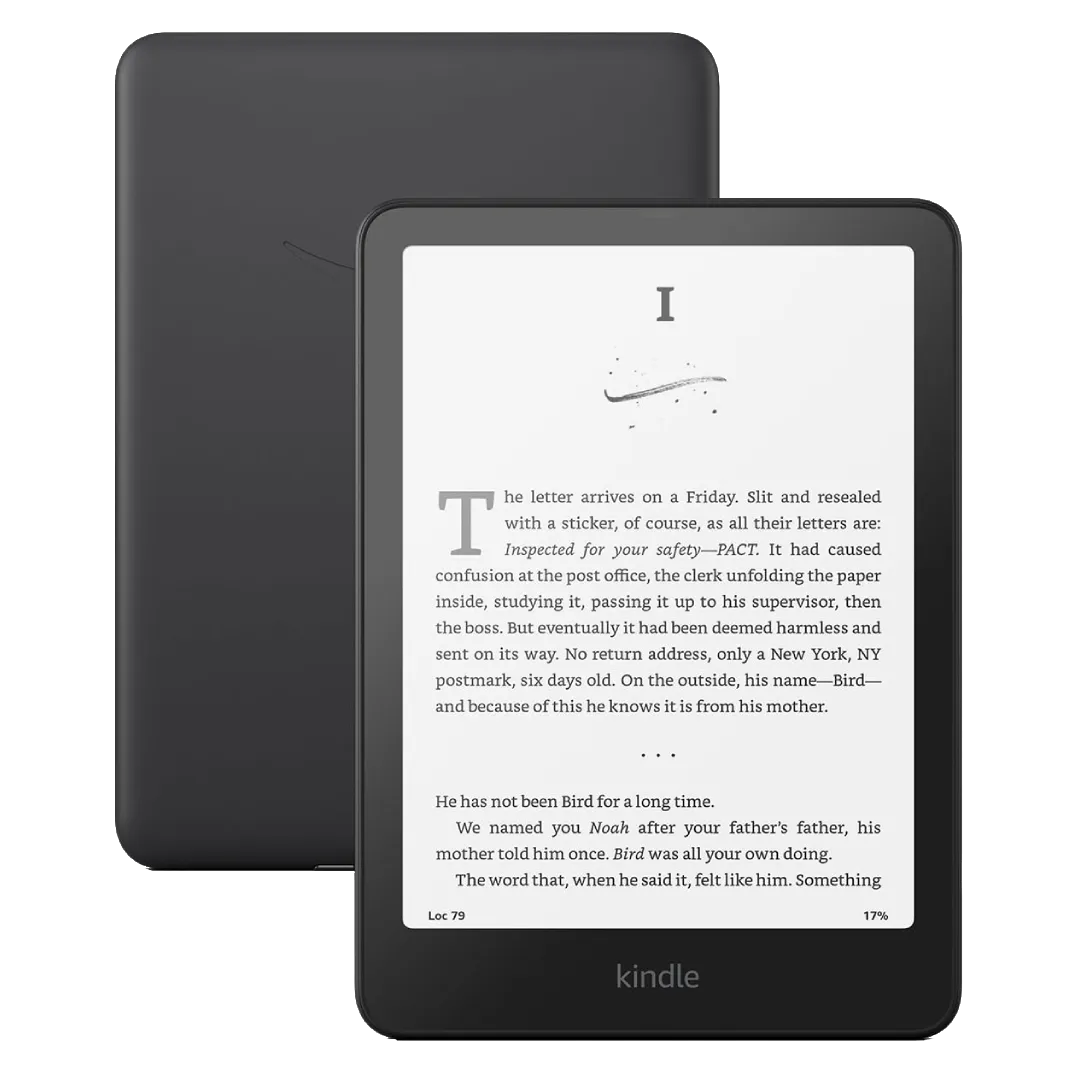
You don’t need to spend $200+ to get a great e-reader. The sub-$150 market has never been more competitive, and honestly, the gap between budget and premium devices has narrowed to the point where most people won’t notice a difference in daily use.
The Kindle Paperwhite (12th Gen) at $149.99 is the one we recommend to most people — and it’s often on sale for $129.99 if you time it right. Its 6.8-inch 300 ppi display is sharp and easy on the eyes, the IPX8 waterproofing means you can read in the bath without anxiety, and the adjustable warm light makes late-night reading feel closer to paper. Battery life stretches to about 10 weeks with moderate use, so you genuinely forget about charging. The real draw, though, is the Kindle Store — it’s simply the largest ebook marketplace out there, and the integration is smooth. The trade-off? Amazon locks you into its format. EPUB files need converting before they work, and library borrowing through Libby is limited to the US.
If that format lock-in bothers you — or if you borrow library books outside the US — the Kobo Clara BW at $139.99 is the better choice. It uses the latest E Ink Carta 1300 panel on a 6-inch 300 ppi screen that actually has slightly better contrast than the Paperwhite. You get the same IPX8 waterproofing and warm light (which Kobo calls ComfortLight PRO), but the real advantages are software-side: native EPUB support with no conversion needed, drag-and-drop file transfer over USB, and built-in OverDrive integration that lets you browse and borrow from your local library directly on the device. That OverDrive support works in 20+ countries, which is a turning point if you’re outside the US. The trade-offs are a noticeably smaller screen — more page turns — and a store that’s good but not as vast as Amazon’s.
For a certain kind of reader, physical buttons are non-negotiable. The PocketBook Verse Pro at $169.99 is the cheapest way to get them, paired with a 6-inch 300 ppi display, SMARTlight (warm and cool temperature adjustment), and IPX8 waterproofing. Where PocketBook really shines is format support: over 20 formats read natively, including EPUB, MOBI, PDF, FB2, and DJVU. You can throw almost any file at it and it just works. The software isn’t as polished as Kindle or Kobo, and the ecosystem is smaller, but for sheer flexibility at this price, nothing else comes close. Just note that the Verse Pro doesn’t have a microSD slot — you need the base PocketBook Verse for that.
If you’re really pinching pennies, the Kindle Basic (2024) at $109.99 gives you a 6-inch 300 ppi display in the lightest Kindle body. You sacrifice warm light and waterproofing, but the text sharpness is identical to the Paperwhite. The PocketBook Verse at $129.99 is another budget option with physical buttons and a microSD slot, though its 212 ppi display is noticeably softer with small fonts.
So who should buy what? If you just want the safe, reliable choice with the best ecosystem, grab the Paperwhite. If you’re a library borrower outside the US or you hate the idea of format lock-in, the Clara BW is your device. And if you want buttons and the freedom to read anything without conversion, the Verse Pro has no equal at this price. You genuinely can’t go wrong with any of them.